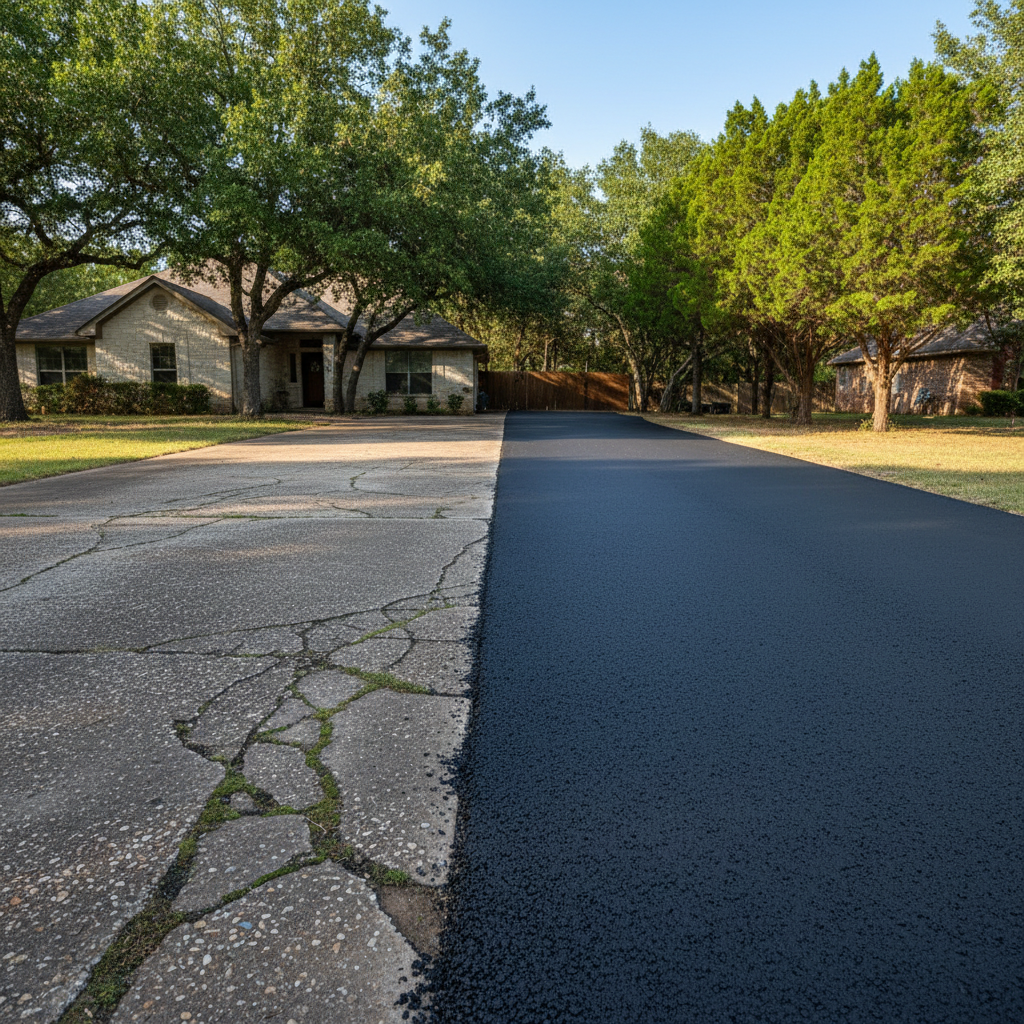
So, you're thinking about a new asphalt driveway, or maybe your old one is just completely shot. You've probably heard terms like 'overlay' and 'full-depth' floating around, and let's be honest, it can get pretty confusing fast. I'm here to clear things up for you. Knowing the difference really can save you a ton of headache and cash down the road.
What's an Asphalt Overlay?
An asphalt overlay is basically putting a fresh, new layer of asphalt right over your existing, damaged surface. We don't rip out the old stuff entirely, nope. Instead, we'll prep the existing surface first – that means fixing any big cracks or potholes, making sure it's stable – and then we lay down what's usually 1.5 to 2 inches of new asphalt on top. Think of it like a big, thick blanket for your driveway.
The main perk here? Cost. Since we aren't doing a full excavation and hauling away all that old material, it generally ends up being a good bit cheaper. It's also quicker to install. You'll see less disruption to your daily routine, which is always a bonus, right? For a lot of folks in Fredericksburg with older but still solid driveways, an overlay can be a fantastic way to get a smooth, fresh look without emptying your wallet.
But, and this is important, an overlay isn't some miracle cure. If your existing asphalt is really falling apart – I'm talking widespread alligator cracking or significant structural failures – an overlay might only be a temporary fix. Those underlying issues can eventually 'telegraph' through the new layer. That means you'll see cracks reappear sooner than you'd like. It's only as good as the foundation it's laid on.
What's Full-Depth Asphalt Paving?
Full-depth paving is exactly what it sounds like: we're going all the way down. This means excavating and removing all the old material – could be old asphalt, gravel, or just dirt – right down to the subgrade. Then, we prepare a brand-new, stable base layer, often crushed aggregate, and finally, we lay down multiple layers of fresh asphalt. Usually, that includes a binder course for strength and a surface course for smoothness and good looks.
This is the Rolls-Royce of asphalt driveways. You're getting a completely new, engineered pavement structure built from the ground up. The durability is simply unmatched, and it's designed to last for decades if you take care of it. For new construction, or if your existing driveway is just beyond repair, full-depth is really the only way to go. It gives you the best long-term performance and, well, peace of mind.
The downside? It's more expensive, no two ways about it. There's more labor involved, more material to haul away, and more new material to bring in. It also takes longer to install. But if you're building a new home, or if your current driveway is crumbling into the caliche soil we often see around here, this is the investment that truly pays off in the long run.
Which One is Right for You?
Here's how I usually break it down for homeowners:
- Cost: Overlay wins for initial savings. Full-depth is a bigger upfront investment, no doubt.
- Durability: Full-depth is the clear winner for longevity and structural integrity. An overlay's lifespan is tied directly to the condition of the existing pavement.
- Maintenance: Both will benefit from regular sealcoating and crack filling. But a full-depth driveway, being new from the ground up, typically needs less intensive repair work over its lifespan.
- Appearance: Both will look fantastic when they're first installed. Overlays can sometimes show 'reflection cracking' from old cracks underneath over time, though.
- Condition of Existing Driveway: This is the crucial factor, truly. If your existing driveway has only minor surface cracking and no major structural issues, an overlay is a strong contender. If it's got significant potholes, large areas of alligator cracking, or major drainage problems, you're almost certainly looking at full-depth paving.
For example, if you've got an older home in the Barons Creek area with a driveway that's seen better days but isn't completely falling apart, an overlay might be perfect. It'll give you that smooth, clean look without the full cost of replacement. But if you're building a new place out near Enchanted Rock, or your current driveway is basically a gravel path with a few asphalt chunks, you'll definitely want to go full-depth.
Ultimately, the best way to figure it out is to have us take a look. We'll come out, assess your existing driveway, and give you an honest recommendation based on its condition, your budget, and what you're hoping to achieve. We've been doing this for a long time at Fredericksburg Asphalt Solutions, and we're here to help you make the right choice for your property.