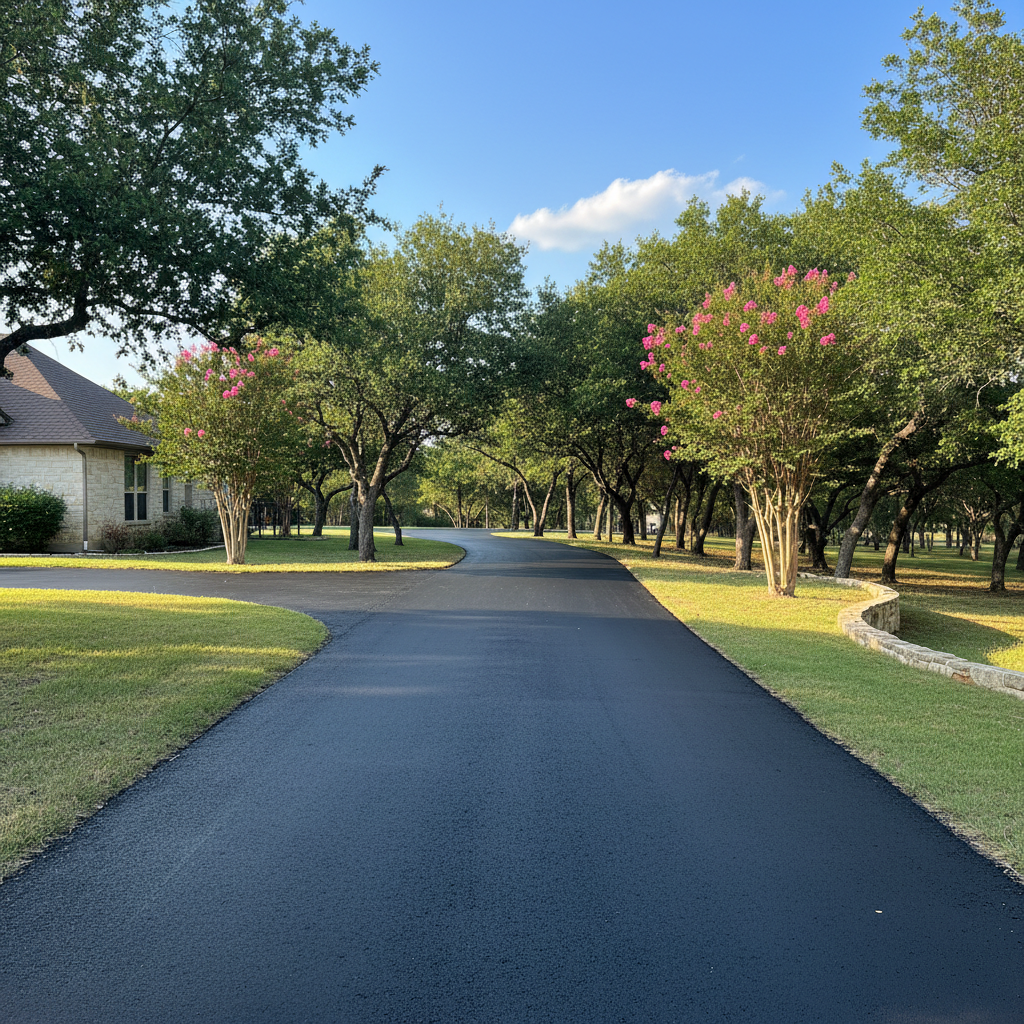
Alright, let's talk about slurry coating. It's one of the best ways to protect your asphalt driveway, especially here in Fredericksburg, but folks often wonder about the best time to get it done. It's not just about slapping it on; timing is everything if you want it to last and do its job right.
Why Timing Matters for Slurry Coating Here
You see, slurry coating isn't paint. It's a mix of asphalt emulsion, aggregate, and fillers designed to fill small cracks, restore lost aggregate, and give your driveway a fresh, durable surface. For it to cure properly and bond with your existing asphalt, you need the right conditions. Our Hill Country climate, with its hot summers and sometimes unpredictable winters, plays a huge role.
If you apply slurry coating when it's too cold, it won't cure correctly. It'll stay soft, track onto your shoes, and just won't bond. If it's too hot, or if the surface is scorching, it can flash cure too quickly, leading to premature cracking or a weak finish. You're basically throwing money away if you don't hit that sweet spot.
The Best Time to Schedule Your Slurry Coating
From what I've seen over the years, the prime windows for slurry coating in Fredericksburg are typically:
- Spring (March to May): This is usually ideal. The ground temperatures are warming up consistently, but we haven't hit the brutal summer heat yet. You get good daytime temps for curing and generally less chance of sudden, heavy downpours that can wash away fresh material.
- Fall (September to early November): Another excellent period. The intense summer heat starts to back off, and while we can still get warm days, the overnight lows are usually mild enough not to cause issues. You want to get it done before we start seeing those first hard freezes, which can definitely happen here, especially in areas like the old Barons Creek neighborhood where the nights can get pretty chilly.
We're looking for consistent daytime temperatures of at least 50°F (and ideally above 60°F) and night temperatures that don't dip below 40°F for at least 24-48 hours after application. That gives the water in the emulsion time to evaporate and the material to harden properly.
Weather Conditions to Watch Out For
Beyond just the temperature, a few other weather factors can mess with your slurry coating job:
- Rain: This is a big one. You absolutely cannot apply slurry coating if rain is in the forecast within 24-48 hours. Fresh slurry coating is water-based, and rain will dilute it, wash it away, or prevent it from curing. We always check the forecast thoroughly before scheduling any work.
- Humidity: High humidity can slow down the curing process significantly. While it's not a deal-breaker like rain, it means the coating will take longer to dry and be ready for traffic.
- Wind: Strong winds can cause the material to dry too quickly on the surface, leading to a weak bond underneath. It can also blow debris onto the wet surface, which you don't want.
- Direct Sunlight: While you need warmth, extreme direct sunlight on a super hot day can cause the surface to dry too fast, leading to issues. We sometimes adjust our start times on those scorching summer days to avoid the absolute peak heat.
Protecting Your Investment Year-Round
Once your driveway is slurry coated by Fredericksburg Asphalt Solutions, you've taken a big step in protecting it. But your job isn't entirely done. Here's how to keep it looking good and performing for years:
- Give it Time to Cure: This is crucial. We'll tell you exactly how long, but typically, you'll need to stay off it for at least 24-48 hours for foot traffic and 48-72 hours for vehicle traffic. Don't rush it!
- Avoid Heavy Loads: For the first few weeks, try to avoid parking heavy vehicles or equipment on it for extended periods, especially during hot weather.
- Clean Spills Promptly: Oil, gas, or other automotive fluids can break down the asphalt. Clean them up as soon as you can.
- Keep it Clean: Sweep off leaves, dirt, and debris regularly. This prevents organic matter from breaking down on the surface and keeps your driveway looking sharp.
- Address Cracks Early: Even with slurry coating, new cracks can form over time. Catch them when they're small and get them filled. Small cracks become big problems quickly if ignored.
By paying attention to the timing and giving your driveway a little ongoing care, you'll get the most out of your slurry coating and keep your property looking great for years to come. It's a smart investment, and doing it right from the start makes all the difference.